
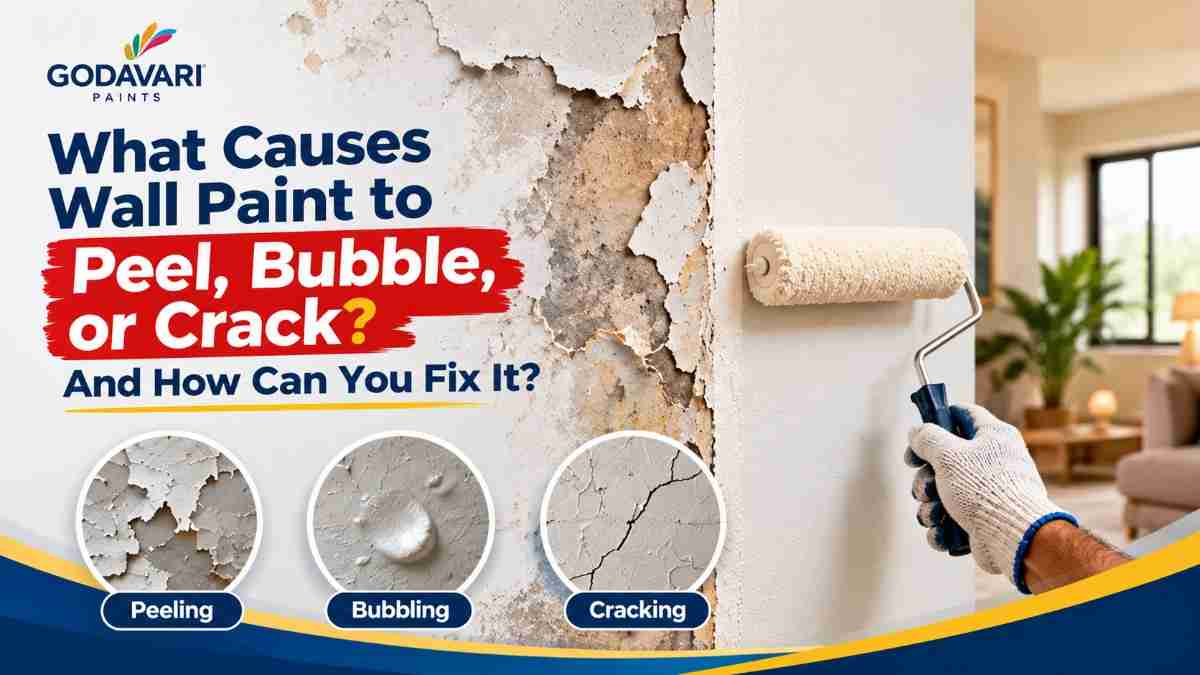
Have you noticed paint peeling from your walls, bubbles forming under the painted surface, or fine cracks appearing shortly after repainting? These problems affect homes, commercial buildings, offices, and industrial properties, especially where walls face moisture, temperature changes, or poor surface preparation.
Wall paint commonly peels, bubbles, or cracks because of moisture intrusion, inadequate surface preparation, poor adhesion, incompatible coating layers, excessive film thickness, or movement in the underlying surface. Identifying the actual cause is essential before repainting.
Simply applying another coat over damaged paint may temporarily hide the problem without correcting it.
Godavari Paints offers interior and exterior paint systems, wall primers, wall putty, and specialized protective coatings for different building surfaces.
This guide explains why paint failures occur, how to distinguish common symptoms, and what to check before repairing and repainting walls.
The most common causes of peeling wall paint are moisture, poor surface adhesion, contaminated substrates, improper priming, incompatible coatings, and painting before the surface is ready.
Common contributing factors include:
Water seepage from roofs, plumbing, or exterior walls.
Painting over damp plaster.
Loose or chalking existing paint.
Dust, grease, or surface contamination.
Inadequate surface preparation.
Incorrect primer selection.
Insufficient drying between coats.
Excessively thick paint application.
Unstable or deteriorating plaster.
Unsuitable environmental conditions during application.
Different causes require different repairs. A moisture-damaged wall, for example, needs a different treatment from a clean but poorly primed wall.
Paint can peel from damp walls because moisture interferes with coating adhesion and may move through the substrate, damaging the paint film or the interface beneath it.
Moisture can enter through:
Plumbing leaks.
Roof or terrace defects.
Damaged exterior plaster.
Cracks around windows.
Poor drainage.
Rising damp.
Water penetration during heavy rainfall.
Before repainting, identify and correct the moisture source.
The wall should then be assessed for residual moisture, damaged plaster, salts, and coating deterioration.
A waterproofing putty or exterior paint cannot substitute for repairing an active water leak.
Paint bubbles or blisters form when pressure, moisture, trapped contaminants, or poor adhesion causes portions of the coating film to lift away from the underlying surface.
Blistering may appear as raised spots or rounded bubbles.
Possible causes include:
Painting over a damp substrate.
Moisture vapor moving through the wall.
Applying incompatible coatings.
Painting on overheated surfaces.
Trapped solvents in unsuitable application conditions.
Poor adhesion to previous paint layers.
Repair blistering paint by removing the damaged coating, identifying the underlying cause, preparing the substrate, and applying a compatible painting system after the surface meets the required conditions.
A practical process includes:
Inspect the affected area.
Investigate possible water penetration.
Remove blistered and loose paint.
Check the underlying plaster or masonry.
Repair defects and allow appropriate drying.
Clean the surface.
Apply a suitable primer.
Finish with the specified paint system.
Follow the selected products' technical application instructions.
Paint may crack after repainting because of excessive film thickness, coating incompatibility, substrate movement, poor drying conditions, or cracks in the underlying plaster.
It is important to identify whether the cracking affects only the paint film or extends into the building material.
Hairline cracks may result from plaster shrinkage, minor substrate movement, coating aging, or paint-film stress.
They are usually narrow, but their significance depends on the underlying construction and whether they are growing.
No. Structural cracks must be assessed and repaired appropriately before decorative or protective coatings are applied.
Cracks that are widening, displaced, repeatedly reopening, or associated with other structural symptoms require evaluation by a qualified building professional.
Paint and wall putty should not be used as substitutes for structural repair.
Poor surface preparation causes paint failure by preventing the coating from bonding properly with a stable, clean, and compatible substrate.
Common preparation mistakes include:
Leaving loose paint on the wall.
Applying primer over dust.
Ignoring surface salts.
Painting over biological growth.
Failing to repair damaged plaster.
Using incompatible coating layers.
Not checking the substrate's moisture condition.
A durable repainting system begins with sound substrate preparation.
Yes. An unsuitable primer may contribute to poor adhesion, uneven absorption, staining, or coating failure when it is incompatible with the substrate or topcoat.
Interior plaster, exterior masonry, previously painted surfaces, and specialized coatings may require different preparation systems.
Before selecting a primer, check:
Surface material.
Existing coating condition.
Interior or exterior exposure.
Substrate alkalinity.
Moisture condition.
Topcoat compatibility.
Manufacturer application requirements.
Godavari Paints lists multiple options in its Wall Primers Collection.
Choose a compatible primer based on the specific surface rather than applying one product to every wall.
Wall putty helps produce a smoother painting surface by filling suitable minor irregularities, pores, and surface imperfections before priming and finishing.
Wall putty does not repair every form of damage.
It is primarily used for surface preparation, leveling, and achieving an appropriate finish.
Godavari Paints offers products such as Supreme Fine Putty, Supreme Coarse Putty, and other specialized wall putties.
Explore its Wall Putty Collection for options.
The correct sequence depends on the substrate and the specified coating system. Many masonry systems involve surface repair, putty application, surface preparation, primer, and final coating, but product-specific instructions must control the actual sequence.
Never assume all cement-based and acrylic putties follow identical application requirements.
Fix peeling interior paint by removing loose coatings, correcting moisture or substrate problems, repairing the surface, and repainting with compatible products.
Follow these general steps:
Identify the cause of the paint failure.
Check for dampness and leaks.
Remove unstable or flaking paint.
Clean dust, contaminants, and biological growth.
Repair damaged plaster.
Apply compatible filler or putty where appropriate.
Allow the surface to reach the specified condition.
Apply a suitable interior primer.
Apply the recommended finishing paint.
Inspect the completed wall after drying.
Where old coatings may contain lead or other hazardous materials, use appropriate testing and safe removal procedures.
Exterior paint repairs require identifying weather-related damage, addressing water entry, removing failed coatings, and selecting a suitable exterior coating system for the exposure conditions.
Exterior surfaces may experience:
Heavy rainfall.
Direct sunlight.
Humidity.
Surface contamination.
Thermal movement.
Algae and fungal growth.
Substrate cracking.
For large exterior areas, review the condition of the entire facade rather than repairing only visible loose paint.
Explore the Exterior Paints Collection for different decorative and protective coating options.
A suitable painting process for damp-prone walls begins with moisture diagnosis and repair, followed by substrate preparation and a coating system compatible with the expected exposure.
Important steps include:
Identify the source of moisture.
Repair leaks and building defects.
Remove affected loose coatings.
Inspect plaster and masonry condition.
Check moisture before repainting.
Select compatible surface preparation materials.
Apply a suitable primer.
Apply the specified coating.
Allow required drying and curing.
Monitor for recurring dampness.
A decorative topcoat cannot guarantee protection against unresolved water intrusion.
Prevent monsoon-related paint failure by maintaining building waterproofing and drainage, repairing cracks, controlling moisture, and scheduling painting during suitable weather conditions.
Before painting:
Inspect roofs and terraces.
Check gutters and downpipes.
Repair leaking joints.
Examine window surrounds.
Check the substrate's moisture condition.
Avoid painting during unsuitable rain or humidity conditions.
Follow the coating manufacturer's application requirements.
For exterior walls, consider products designed for the site's environmental exposure.
Professional evaluation is advisable when paint failure is widespread, moisture keeps returning, plaster is deteriorating, or cracks suggest movement in the building.
Seek qualified assistance if you notice:
Recurring leakage.
Persistent dampness.
Widespread plaster separation.
Significant or growing cracks.
Repeated paint failure.
Difficult-to-access exterior elevations.
Possible structural damage.
Correcting the cause is more important than repeatedly repainting the symptoms.
Godavari Paints offers wall preparation products, primers, interior paints, exterior coatings, and specialized finishes that contractors can evaluate for residential and commercial painting systems.
Its product portfolio includes:
Interior wall primers.
Exterior masonry primers.
Fine and coarse wall putties.
Decorative interior emulsions.
Exterior protective coatings.
Selected waterproofing-oriented products.
The appropriate combination depends on the wall condition and technical requirements.
Review Primers, Wall Putty, and Exterior Paints before choosing a system.
Homeowners and contractors commonly ask whether dampness, primer selection, painting conditions, or substrate cracking causes wall paint failure.
No. Loose or peeling paint should be removed, and the underlying issue should be corrected before repainting.
Wall putty can improve suitable surface leveling, but it cannot prevent peeling caused by active moisture, incompatible coatings, or unstable plaster.
Yes. Moisture beneath a paint film can contribute to blistering and loss of adhesion.
New paint may peel when the existing coating is loose, contaminated, glossy without appropriate preparation, or incompatible with the new system.
No. Exterior coatings can help manage rain exposure when correctly specified, but they do not replace repairs to defective waterproofing, joints, drainage, or structural cracks.
Yes. Cracks should be inspected and appropriately repaired before applying the finishing coating.
Yes. A suitable primer can improve adhesion to compatible, properly prepared substrates.
Drying and curing requirements depend on the substrate, moisture conditions, coating products, and environmental conditions. Follow manufacturer instructions and assess the wall before painting.
You can select an appropriate paint system by identifying the wall condition, moisture exposure, substrate type, finishing requirements, and project location before requesting product recommendations.
For residential, commercial, and contractor enquiries, share photographs, approximate surface area, details of existing coatings, and the problems observed.
Explore Godavari Paints Primers, Wall Putty, and Exterior Paints, or contact Godavari Paints for product and project enquiries.

When we think about painting a property, it's easy to focus purely on aesthetics—the perfect shade o...
read more
When stepping into a home, an office, or a healthcare facility, the walls do more than define the st...
read more
When planning a painting project, it is easy to get caught up in choosing the perfect topcoat color...
read more
Every architectural masterpiece demands a flawless canvas, and extraordinary walls are no exception....
read more
Are you responsible for maintaining a reinforced concrete building, commercial structure, bridge, or...
read more
Are you looking for a decorative wall finish that adds depth, character, and visual interest to a ho...
read more
Are hairline cracks, recurring rain exposure, or fading exterior walls affecting your building's app...
read more